CHAPTER 07   /   09 · Regenerate
REPLENISHMENT & RENEWAL

Tend what
matters.

Renewal grows through patient, appropriate care.

7–10 min to explore · Pause and return whenever you like

Tap an image. Follow your curiosity.
Nature. Awareness. Possibility.0 of 9 chapters explored

You return to the tired patch of ground. This time you see more than wilted growth. You notice the exposed soil, the repeated foot traffic, the lack of mulch. Renewal begins with a better understanding of what the place has been carrying.

THE PRINCIPLE

Regeneration supports the capacity for renewal over time.

Maintaining, repairing and regenerating can all be valuable forms of care. Our regenerative emphasis asks a further question: what would replenish resources and support continuing renewal, rather than repeatedly drawing down what is available?

01

Replenish and reduce pressure

Adding support while leaving every recurring demand unchanged may not be enough. Consider both sides: what needs nourishment, and what is repeatedly consuming the available capacity? Sometimes reducing a demand is the most caring step.

02

Respect limits and different seasons

Human recovery is not identical to garden growth. Chronic illness, disability, ageing and grief may change what renewal looks like. It can mean greater comfort, function, dignity, connection or practical support, even when a condition cannot be reversed.

03

Learn through feedback

Observe, offer appropriate care, allow time and return. Ask whether the care helped and what else changed. A good day or a difficult day alone cannot establish a cause. Seek the support needed to interpret persistent or concerning symptoms.

IN EVERYDAY LIFE
AN ILLUSTRATIVE EXAMPLE

For an exhausted carer, “more self-care” may become another task. A regenerative response might include shared responsibilities, respite, nourishing food and access to appropriate care. The surrounding relationships are part of the response.

EXPLORE FOR YOURSELF

Explore a cycle of care

Choose each stage to see the same garden through a different question. The visual changes illustrate a process of care; they do not predict recovery or show a real time-lapse.

There is no score. Explore what is useful, and leave room for your own experience.

LET THE IDEA MEET YOUR LIFE

Pause to
Consider.

Stay with one question, or explore all three. A few words can be enough. You may also reflect without writing.

CARRY IT INTO YOUR DAY

A small practice.

Choose one small replenishment and one pressure you might reduce or share. Return after a few days to observe. Adjust the plan with compassion and seek professional help where needed.

Renewal may involve adding support, reducing demands and sharing the work.

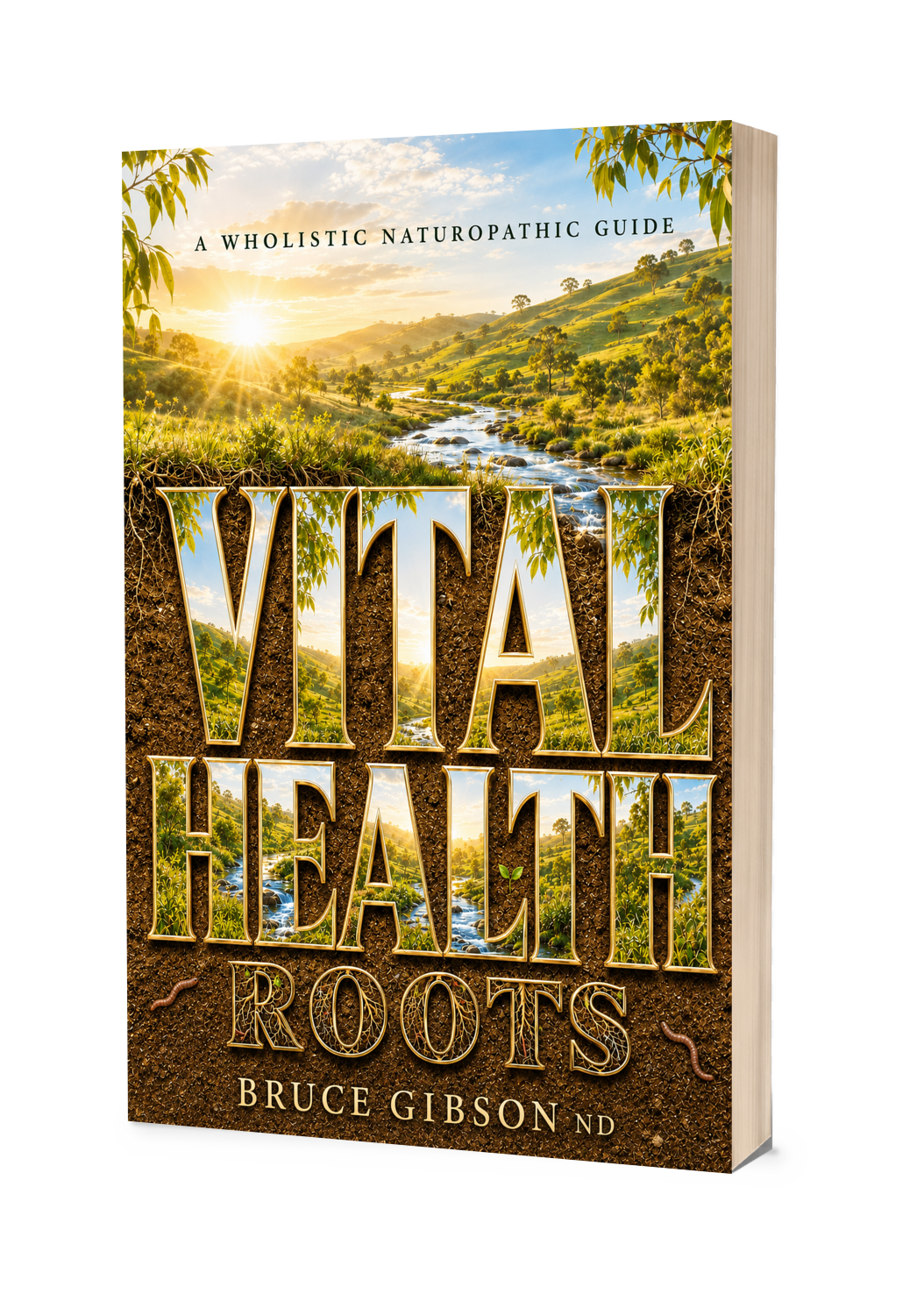
Vital Health Roots by Bruce Gibson ND, a wholistic naturopathic guide
CONTINUE WITH VITAL HEALTH ROOTS

Create conditions for renewal.

Read further about the living relationships that shape energy, regulation, resilience and everyday wellbeing.

A companion resource by Bruce Gibson ND. Explore at your own pace. Links open in a new tab so your journey stays here.

Evidence, metaphor & further learning READ THE LAYERS

Soil biology and soil conditions influence plant growth. Human regeneration in this chapter is a care philosophy and ecological metaphor, not a claim that all tissues or diseases can regenerate or resolve.
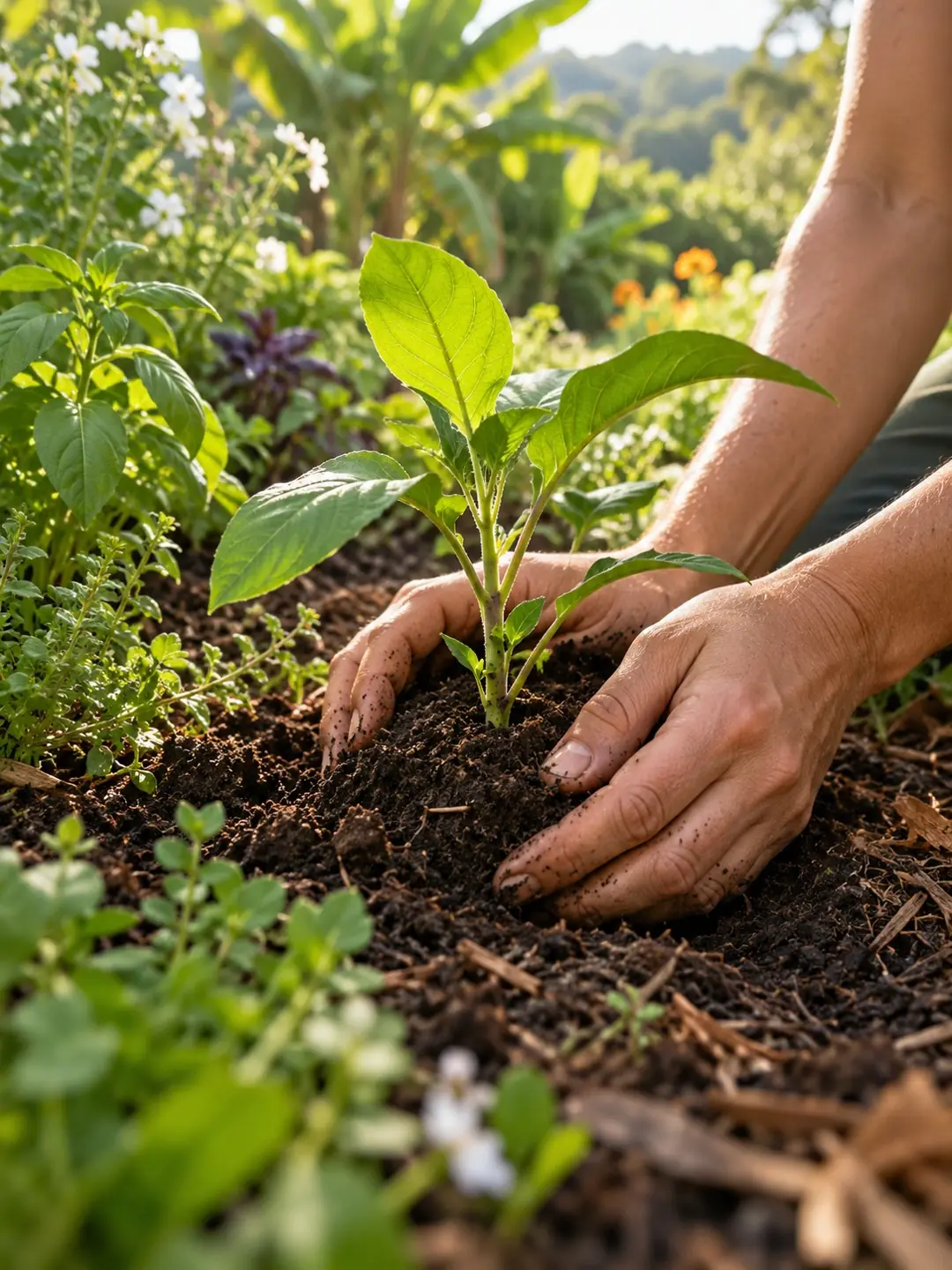
Nature imagery is illustrative. An individual observation can guide a question; it does not establish a cause or diagnose a condition.

The garden has neighbours. Renewal can extend beyond its boundaries.

NINE CHAPTERS · ONE LIVING JOURNEY

Follow your curiosity.

Begin at the beginning, continue where you left off, or revisit what matters today. There are no locked chapters.

    Progress is a record of exploration, not a measure of wellbeing.

    THINGS YOU NOTICE ALONG THE WAY

    Your living journal.

    Your notes stay in this browser when storage is available. They are not submitted to us. Export a copy before clearing browser data or changing devices.

    A WAY OF SEEING · A PRACTICE OF CARE

    About this journey.

    This nine-chapter experience introduces Bruce Gibson ND’s Wholistic Ecology™ and Regenerative Wellness teachings through nature, reflection and everyday practice.

    Wholistic Ecology explores relationships within and between living systems. Regenerative Wellness applies that perspective through nourishment, renewal, reciprocity and appropriate care.

    Read the layers clearly

    Teaching framework The principles, “Automatic Living”, “Awareness Ecology”, “ecological incoherence” and the seven Vital Health Roots organise the learning. They are not established clinical diagnoses or a validated treatment programme.

    Ecological metaphor Gardens, roots and landscapes make relationships easier to explore. A garden and a human body are different systems. Our images do not establish human biological mechanisms.

    Evidence & further learning Source notes identify established knowledge, open questions and limits. The independent organisations linked here have not endorsed this journey.

    A pace that fits your life

    Explore one chapter at a time, or take a longer wander. All activities and reflections are optional. Adapt practices to your capacity and personal care needs. Education and reflection can complement appropriate healthcare.

    Images & accessibility

    The landscape, roots cutaway and tending image were created with AI. They are conceptual illustrations, not scientific photographs. Other starter photographs are from Unsplash. Moving cards is optional; buttons and keyboard controls offer access to the learning. Motion respects your device’s reduced-motion preference.

    Your notes

    Your reflections, chapter progress and ecology map are stored only in this browser when available. They do not sync across devices. You can export or print them from My journal. A return date in your map does not create a reminder.

    References and Learning Sources

    Explore Bruce Gibson ND’s book and connected teaching resources to continue your learning.

    Independent references

    Browse independent learning sources

      Sources checked 17 October 2026. Each source supports the specific topic described in its chapter, not the framework as a whole.

      A MOMENT TO LOOK AGAIN

      Top