CHAPTER 02   /   09 · Connect
ROOTS & RELATIONSHIPS

Everything
is connected.

Relationships shape what becomes possible.

6–10 min to explore · Pause and return whenever you like

Tap an image. Follow your curiosity.
Nature. Awareness. Possibility.0 of 9 chapters explored

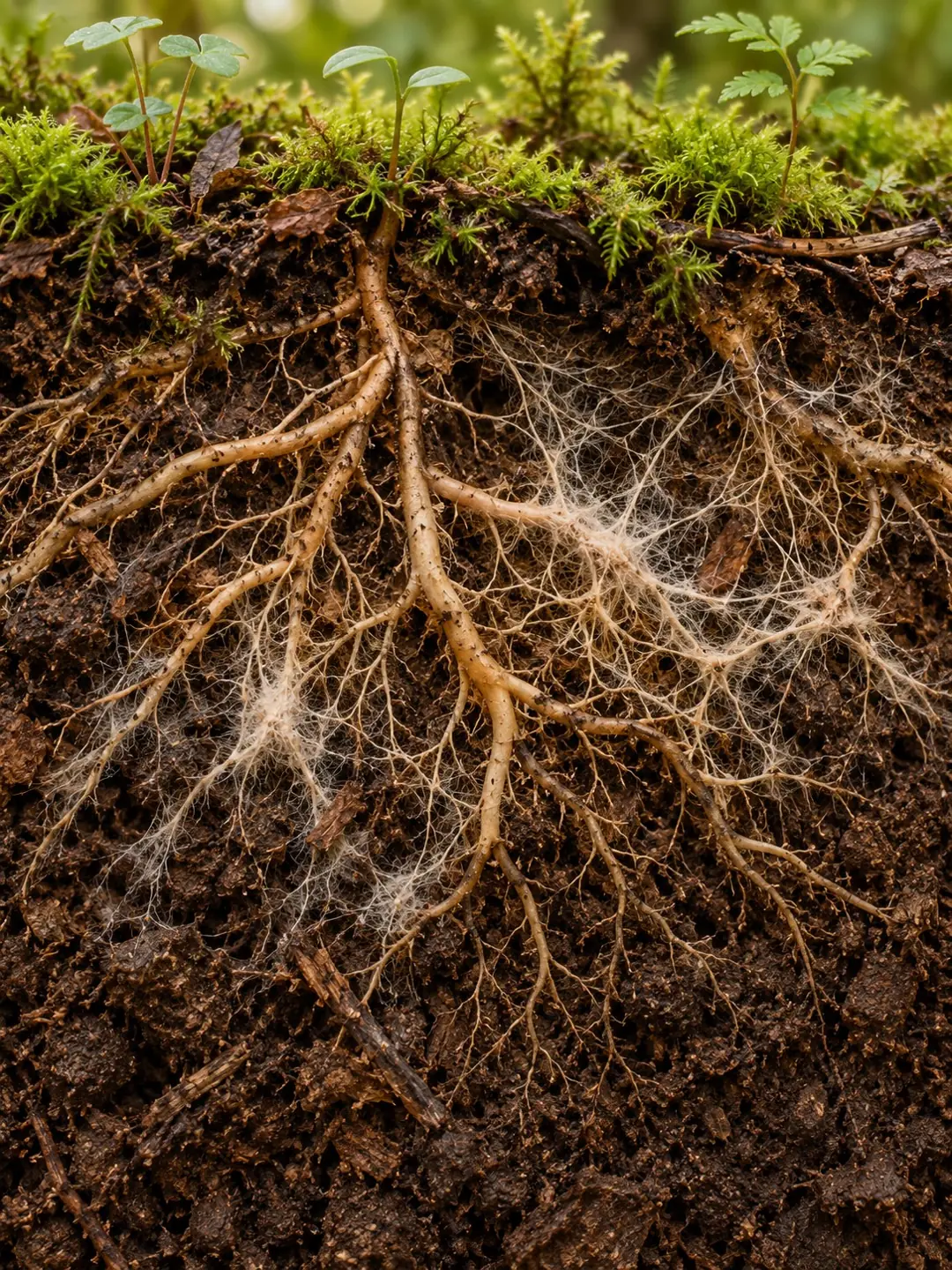
Kneeling beside the garden bed, you lift a little mulch. Below the green surface is another landscape: branching roots, fine fungal threads, spaces that hold water and air. The plant is an individual, yet its life is inseparable from what surrounds it.

THE PRINCIPLE

The quality of relationships influences the life of a system.

“Everything is connected” becomes useful when we ask more precise questions: connected how, under which conditions, and with what effects? Some relationships support life. Others compete, strain or need boundaries.

01

Follow an exchange

In many mycorrhizal associations, a plant supplies carbon compounds to a fungus, while the fungus helps the plant access soil nutrients. These relationships vary with species and conditions. The illustration is conceptual; it is not a map of every forest or a claim that trees act with human intentions.

02

Bring the question into daily life

Think of a rushed morning. A late start may affect breakfast, travel, concentration and the tone of a conversation. Changing one condition may help several experiences, although it cannot guarantee a particular result.

03

Connection also needs discernment

More connection is not always better. A supportive relationship may require clearer boundaries. Information can be helpful or overwhelming. Ask about the quality, timing and reciprocity of an exchange, as well as its presence.

IN EVERYDAY LIFE
AN ILLUSTRATIVE EXAMPLE

A plant that struggles in compacted soil may need a change in its surroundings. In human life, a habit that seems difficult may also involve working hours, money, support or access. Looking at conditions can reveal options that self-criticism misses.

EXPLORE FOR YOURSELF

Follow a living relationship

Choose two elements to reveal an exchange. Then consider a similar relationship in your own daily life. These are simplified examples, not a complete ecosystem model.

There is no score. Explore what is useful, and leave room for your own experience.

LET THE IDEA MEET YOUR LIFE

Pause to
Consider.

Stay with one question, or explore all three. A few words can be enough. You may also reflect without writing.

CARRY IT INTO YOUR DAY

A small practice.

Choose an ordinary difficulty. Write down one surrounding condition that may contribute, and one condition that could help. Keep these as possibilities to explore, not conclusions about a cause.

Look for the exchange, the context and the quality of connection.

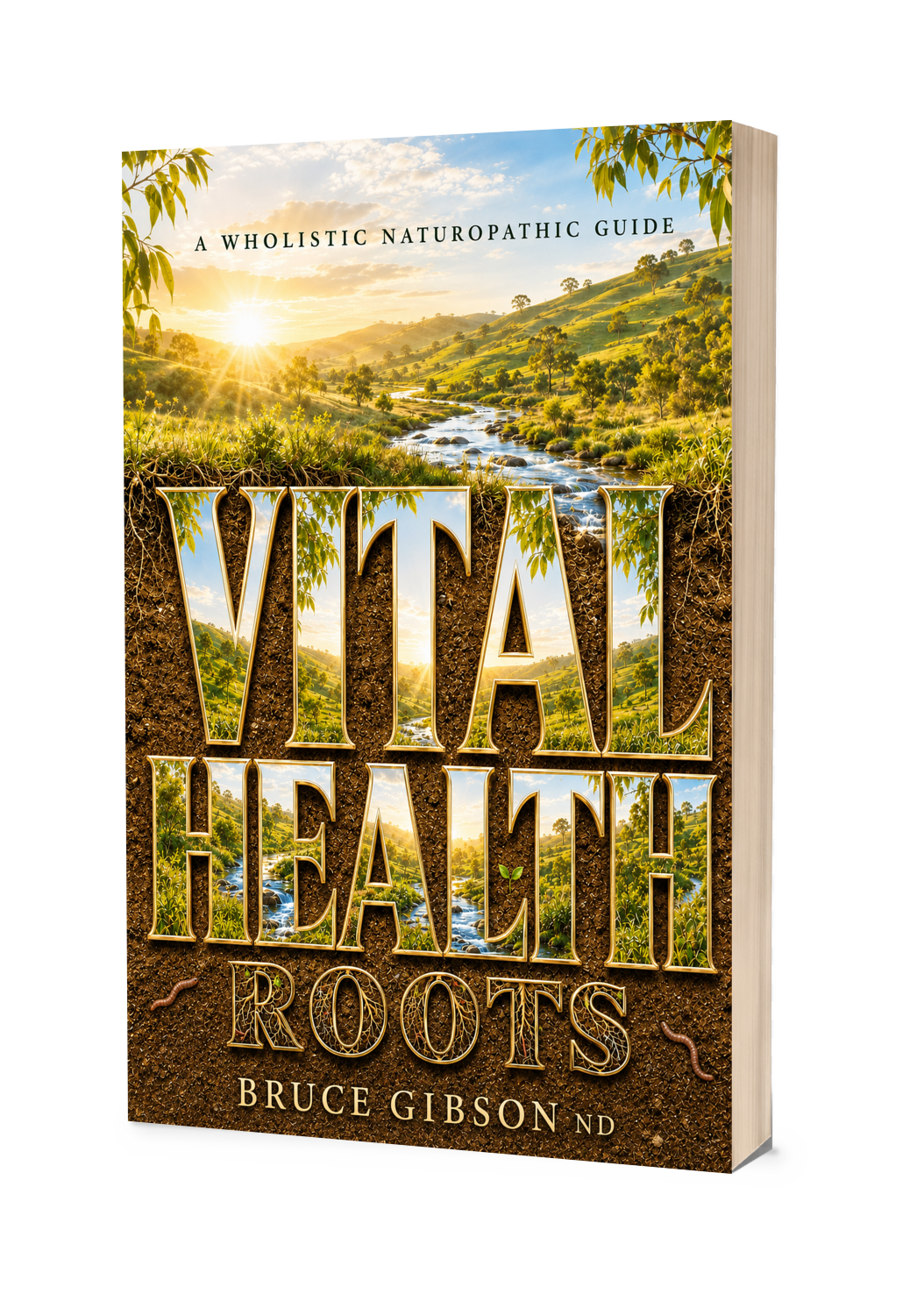
Vital Health Roots by Bruce Gibson ND, a wholistic naturopathic guide
CONTINUE WITH VITAL HEALTH ROOTS

Keep exploring beneath the surface.

Follow the relationships between your inner ecology, your surroundings and the conditions that support vitality.

A companion resource by Bruce Gibson ND. Explore at your own pace. Links open in a new tab so your journey stays here.

Evidence, metaphor & further learning READ THE LAYERS

Plant–fungus associations are established ecology. The garden-to-life comparisons here are metaphors. Specific claims about forest-wide sharing and communication need their own evidence.
Nature imagery is illustrative. An individual observation can guide a question; it does not establish a cause or diagnose a condition.

Relationships occur at many scales. Let us widen the view.

NINE CHAPTERS · ONE LIVING JOURNEY

Follow your curiosity.

Begin at the beginning, continue where you left off, or revisit what matters today. There are no locked chapters.

    Progress is a record of exploration, not a measure of wellbeing.

    THINGS YOU NOTICE ALONG THE WAY

    Your living journal.

    Your notes stay in this browser when storage is available. They are not submitted to us. Export a copy before clearing browser data or changing devices.

    A WAY OF SEEING · A PRACTICE OF CARE

    About this journey.

    This nine-chapter experience introduces Bruce Gibson ND’s Wholistic Ecology™ and Regenerative Wellness teachings through nature, reflection and everyday practice.

    Wholistic Ecology explores relationships within and between living systems. Regenerative Wellness applies that perspective through nourishment, renewal, reciprocity and appropriate care.

    Read the layers clearly

    Teaching framework The principles, “Automatic Living”, “Awareness Ecology”, “ecological incoherence” and the seven Vital Health Roots organise the learning. They are not established clinical diagnoses or a validated treatment programme.

    Ecological metaphor Gardens, roots and landscapes make relationships easier to explore. A garden and a human body are different systems. Our images do not establish human biological mechanisms.

    Evidence & further learning Source notes identify established knowledge, open questions and limits. The independent organisations linked here have not endorsed this journey.

    A pace that fits your life

    Explore one chapter at a time, or take a longer wander. All activities and reflections are optional. Adapt practices to your capacity and personal care needs. Education and reflection can complement appropriate healthcare.

    Images & accessibility

    The landscape, roots cutaway and tending image were created with AI. They are conceptual illustrations, not scientific photographs. Other starter photographs are from Unsplash. Moving cards is optional; buttons and keyboard controls offer access to the learning. Motion respects your device’s reduced-motion preference.

    Your notes

    Your reflections, chapter progress and ecology map are stored only in this browser when available. They do not sync across devices. You can export or print them from My journal. A return date in your map does not create a reminder.

    References and Learning Sources

    Explore Bruce Gibson ND’s book and connected teaching resources to continue your learning.

    Independent references

    Browse independent learning sources

      Sources checked 17 October 2026. Each source supports the specific topic described in its chapter, not the framework as a whole.

      A MOMENT TO LOOK AGAIN

      Top